Watercolor Ancient Rome Empire Patterns
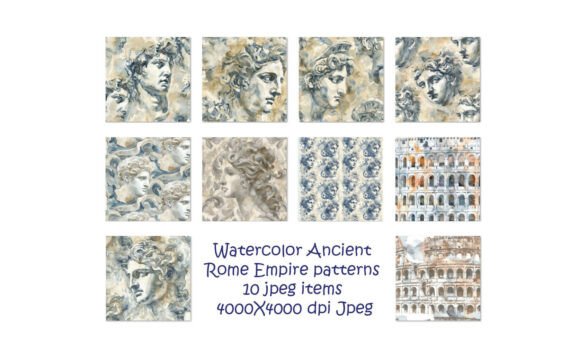
There is a specific kind of visual weight that comes with Roman imagery. It isn’t just about the architecture or the mythology; it’s about the texture, the history, and the enduring aesthetic of an empire that shaped Western civilization. When you combine that historical gravity with the soft, unpredictable flow of watercolor, you get something surprisingly versatile. Watercolor Ancient Rome Empire Patterns offer a unique blend of classical elegance and artistic fluidity, making them far more than just decorative clipart.
If you are a designer, educator, or small business owner looking to add depth to your projects without resorting to stiff, rigid vector graphics, these patterns provide a rich resource. The collection typically includes high-resolution assets—often delivered as 4000x4000 pixel JPEG files—that allow for extensive cropping and scaling without losing quality. Whether you are designing a luxury packaging box, creating educational materials for a history class, or building a brand identity for a boutique hotel, understanding how to leverage these textures can elevate your work from standard to sophisticated.
Why Watercolor? The Aesthetic Advantage
In a digital landscape dominated by crisp vectors and neon gradients, watercolor brings a human touch. It suggests craftsmanship, tradition, and authenticity. For brands in the food and beverage industry, particularly those dealing with olive oil, wine, or artisanal pasta, the connection to ancient Mediterranean cultures is immediate and powerful. A pattern featuring muted terracottas, faded golds, and soft blues evokes the feeling of an old villa or a sun-drenched marketplace.
The "Ancient Rome" aspect doesn't necessarily mean every image must feature a gladiator or a chariot. Often, the most effective patterns use subtle motifs: laurel wreaths, columns, marble textures, or abstract geometric layouts inspired by mosaics but rendered in paint. This subtlety allows the design to support the content rather than overpower it. It creates a background that feels lived-in and textured, adding a layer of narrative to whatever project it adorns.
Professional Applications for Creators and Marketers
For graphic designers and marketers, having access to high-quality, high-resolution assets like Watercolor Ancient Rome Empire Patterns (specifically the 4000x4000 JPEG format) solves several practical problems. First, resolution is key. A 4000-pixel square image provides ample data for print production. You can zoom in on a single brushstroke or pull back to see the entire composition. This flexibility is crucial when designing large-format items like exhibition banners, book covers, or website headers.
- Packaging Design: Imagine a premium soap brand or a specialty spice company. Using a watercolor Roman pattern on the label instantly communicates heritage and quality. It stands out on a shelf cluttered with bright, modern designs.
- Digital Marketing: Bloggers and content creators can use these patterns as featured images or section dividers. They break up text-heavy pages and guide the reader’s eye naturally through the content.
- Event Invitations: For weddings, galas, or corporate retreats with a classical theme, these patterns provide an instant mood board. They convey formality without being stuffy.
The versatility extends to social media as well. In an era where Instagram and Pinterest drive discovery, visually rich backgrounds help posts pop. A watercolor texture adds a tactile quality to a screen-based medium, making the viewer feel a sense of closeness to the subject matter.
Educational and Historical Context
Education is another area where these resources shine. Teachers and curriculum developers often struggle to find visuals that are both historically accurate and engaging for students aged 8 to 18. Stock photos of ruins can be dry, while cartoonish illustrations might undermine the seriousness of the topic. Watercolor patterns strike a balance.
When teaching the rise and fall of the Roman Empire, educators can use these patterns to create interactive worksheets, presentation slides, or classroom posters. The artistic style encourages students to think about the culture not just as dates and battles, but as a living, breathing society with art, fashion, and daily rituals. For homeschooling parents or tutors, these high-res images can be printed at various sizes to create flashcards or timeline decorations, making learning more immersive.
Furthermore, museums and cultural institutions can utilize these patterns for promotional materials. A virtual tour of the Colosseum or the Pantheon paired with a complementary watercolor background creates a cohesive digital experience that respects the source material while making it accessible to a modern audience.
Considerations Before You Use or Buy
While the appeal of Watercolor Ancient Rome Empire Patterns is strong, there are practical steps to take before integrating them into your workflow. The first consideration is licensing. Not all digital assets are created equal. If you are using these patterns for commercial products, such as selling t-shirts or branded merchandise, you must ensure the license permits commercial use. Some creators offer personal-use-only licenses, which would restrict your ability to profit from the designs.
Secondly, consider the color palette. Watercolor is inherently variable. Even within a set of 10 JPEG items, the saturation and tone may vary slightly. Ensure the colors align with your existing brand guidelines. If your brand uses bright primary colors, a muted, earthy Roman palette might clash. However, if you are aiming for a vintage, rustic, or elegant look, these patterns will likely integrate seamlessly.
Technical compatibility is also worth noting. While JPEG is a widely supported format, it is a lossy compression type. For heavy editing or transparency needs, PNG might be preferable. However, for background textures and full-bleed designs, the 4000x4000 JPEG offers a good balance of file size and quality. Make sure your software can handle images of this dimension without lagging, especially if you are working on older hardware.
Maximizing Value from a 10-Item Collection
A collection of ten distinct patterns offers significant variety. Instead of using one pattern repeatedly, mix and match to create contrast. Use a bold, column-heavy pattern for a header and a softer, abstract wash for a footer. This variation keeps the user engaged and prevents visual fatigue. For example, a blogger might use Pattern #1 for their "History" section and Pattern #5 for their "Culture" section, creating a subtle navigational aid through visual cues.
Entrepreneurs should also think about scalability. Can these patterns be tiled? With 4000 pixels of width and height, many watercolor designs have edges that fade out, allowing for seamless tiling in web design or wallpaper creation. Test the edges in your design software to see if they repeat cleanly. If they do, you can expand the utility of the asset far beyond its original dimensions, covering entire websites or large physical spaces.
Final Thoughts on Integration
The true value of Watercolor Ancient Rome Empire Patterns lies in their ability to bridge the gap between past and present. They bring the grandeur of antiquity into modern contexts without feeling dated or irrelevant. By choosing high-resolution, thoughtfully designed assets, you are investing in the perceived quality of your own work.
Whether you are a freelancer trying to win over a client who wants a "classic" feel, or a hobbyist creating a scrapbook of your travels, these patterns provide a reliable foundation. They require less effort to make look professional compared to sourcing individual elements and assembling them yourself. In a world where attention spans are short and visual standards are high, leveraging these timeless textures is a smart, practical strategy for anyone looking to communicate sophistication and depth.
Take the time to explore the nuances of each pattern. Look at how the light hits the painted columns or how the ink bleeds into the paper texture. Understanding the artistry behind the pattern will help you apply it with more intention and confidence. Ultimately, the goal is not just to fill space, but to tell a story. And few stories are as compelling as the enduring legacy of Rome, reimagined through the gentle lens of watercolor.