Magenta Pink Glitter Flower Patterns: A Practical Guide to Integrating Digital Assets into Creative Workflows
In the modern digital creative economy, the distinction between a concept and its final execution often hinges on the quality of the assets used. For designers, small business owners, educators, and hobbyists alike, sourcing high-quality, versatile visual elements is not merely an aesthetic choice but a critical component of workflow efficiency. Among the myriad of available digital resources, Magenta Pink Glitter Flower Patterns represent a specific niche that bridges bold visual impact with professional-grade utility. This guide explores how these seamless patterns can be integrated into various production pipelines, from print-on-demand services to digital planning tools, ensuring that your projects maintain consistency, quality, and commercial viability.
Understanding the Asset: Specifications and Technical Quality
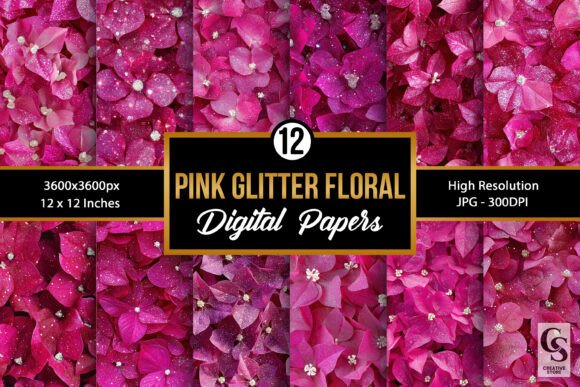
Before integrating any digital asset into a professional workflow, it is essential to understand its technical specifications. The collection in question consists of 12 distinct digital papers featuring magenta pink glitter flower motifs. While the visual appeal is immediate, the underlying data structure determines its usability across different platforms. These files are provided as a single zip archive, streamlining the download and organization process for users who manage multiple project folders.
The most critical specification for any print or high-resolution digital deliverable is resolution. Each file within this set is rendered at 300dpi (dots per inch), which is the industry standard for crisp, professional printing. At this density, the glitter effect and floral details remain sharp even when scaled for large-format outputs like wall art or posters. Furthermore, the dimensions of each image are 3600 x 3600 pixels, equivalent to a physical size of 12 inches by 12 inches at full resolution. This square format is particularly advantageous because it aligns perfectly with common scrapbooking standards, social media aspect ratios, and digital planner page layouts.
For professionals managing large volumes of design work, the fact that all 12 variations are contained within one organized zip file reduces friction in the asset management phase. It allows for quick browsing and selection without navigating complex directory structures, thereby saving valuable time during the initial stages of a project.
Integration into Print Production Workflows
One of the primary use cases for high-resolution seamless patterns is in print production. Whether you are running a small business selling stationery or creating custom gifts for clients, the transition from digital file to physical product requires careful consideration of scale and repetition.
Gift Wrapping and Stationery Design
Magenta pink is a vibrant, energetic color that commands attention. When paired with a glitter texture, it adds a tactile visual depth that translates well to glossy or matte paper stocks. Because the pattern is seamless, it can be tiled infinitely in design software such as Adobe Illustrator, Photoshop, or Affinity Designer without visible seams. This makes it ideal for wrapping paper designs where the pattern must repeat seamlessly around corners and edges.
For stationery entrepreneurs, these patterns serve as excellent backgrounds for letterheads, envelopes, and greeting cards. The 12″ x 12″ resolution ensures that even if a client requests a larger format, the source file has sufficient pixel data to upscale without significant loss of clarity. However, it is important to note that while 300dpi is suitable for most prints, extremely large format banners may require vector-based solutions. In those cases, these raster images serve best for mid-range prints like flyers, postcards, and book covers.
Quality Control in Printing
When using magenta-heavy designs, color management becomes crucial. Magenta is a primary subtractive color in CMYK printing, meaning it plays a heavy role in the ink mix. To ensure the final print matches the screen preview, users should convert their working files from RGB (the color mode of digital screens) to CMYK before sending them to print. This step prevents unexpected shifts in hue, ensuring that the "glitter" effect appears as intended rather than muddy or oversaturated.
Digital Applications and Content Creation
Beyond physical goods, these patterns are highly effective in digital content creation, particularly for bloggers, educators, and social media managers. The versatility of the 12″ x 12″ format allows for easy cropping and adaptation to various digital needs.
Digital Planners and Journals
The digital planning market has seen significant growth, with users seeking aesthetically pleasing yet functional templates. These glitter flower patterns are perfect for creating background pages in PDF planners, such as GoodNotes or Notability templates. The repetitive nature of the seamless pattern provides a consistent visual theme throughout the journal, enhancing user engagement without distracting from the functional elements like date boxes and checklists.
Educators and coaches can utilize these backgrounds for printable worksheets or course materials. The bright magenta tone can be used to highlight key sections or create visually distinct modules within a larger curriculum document. By maintaining a consistent visual identity through the use of these specific patterns, creators can build brand recognition among their audience.
Social Media and Web Backgrounds
For marketers and influencers, visual consistency is key to building a personal brand. These patterns can be adapted for Instagram story backgrounds, Pinterest pins, or website headers. The high resolution ensures that the images look sharp on Retina displays and high-DPI mobile screens. Additionally, the floral motif offers a feminine, elegant aesthetic that resonates well with audiences interested in lifestyle, beauty, and wellness topics.
Workflow Efficiency and Organization
Integrating new assets into an existing workflow requires more than just opening the file; it involves organizing and preparing the asset for repeated use. Here are practical steps to streamline this process:
- Asset Naming and Tagging: Upon unzipping the files, rename them with descriptive tags (e.g., "MagentaGlitterFlower_01_Print," "MagentaGlitterFlower_02_Digital") to facilitate quick searching in future projects.
- Format Conversion: Depending on your software, you may need to convert the JPG files to PNG to preserve transparency if you plan to overlay other elements, or keep them as JPG for maximum compatibility with older design programs.
- Batch Processing: If you are producing multiple items, such as a set of 12 matching notebooks, use batch processing features in your design software to apply the different patterns from the set to each item automatically. This reduces manual labor and ensures uniform sizing.
- Backup and Storage: Since these are digital downloads, ensure they are stored in a cloud-backed-up folder structure. Losing access to a unique asset can halt production, so treating these files as critical intellectual property is wise.
Considerations for Commercial Use
For entrepreneurs and freelancers, understanding the licensing terms of digital assets is non-negotiable. While the prompt indicates these are included in a zip file, users must verify whether the license permits commercial use. Typically, "digital papers" allow for end-product sales (like printed journals) but prohibit the resale of the raw digital files themselves. Always review the End User License Agreement (EULA) associated with the purchase.
When creating products for sale, consider the uniqueness of your output. Using the same popular pattern as thousands of other sellers may dilute brand differentiation. To add value, combine these magenta glitter flower patterns with custom typography, hand-drawn illustrations, or unique layout structures. This hybrid approach transforms a generic asset into a proprietary design element, increasing the perceived value of your final product.
Long-Term Utility and Versatility
The longevity of a digital asset depends on its adaptability. Magenta pink is a trendy color that cycles through fashion and design trends, but its association with flowers and glitter gives it a timeless elegance. This makes it suitable for seasonal campaigns (such as Valentine’s Day or Mother’s Day) as well as year-round branding. The 12 variations provide enough diversity to rotate through different themes without exhausting the visual library too quickly.
Furthermore, the seamless nature of the pattern allows for experimentation. Users can stretch, rotate, or overlay the patterns to create secondary effects. For instance, placing a semi-transparent layer of one pattern over another can create a complex, multi-layered texture that looks bespoke. This level of customization ensures that the asset remains useful even after the initial novelty wears off, providing a higher return on investment for the creator.
Conclusion
Incorporating Magenta Pink Glitter Flower Patterns into your creative toolkit is more than a decorative choice; it is a strategic decision that impacts the quality, speed, and professionalism of your output. With high-resolution 300dpi files ready for both print and digital applications, these assets offer flexibility for a wide range of industries. By adhering to proper workflow practices—such as color management, asset organization, and thoughtful integration—you can leverage these patterns to produce compelling, market-ready designs that stand out in a crowded digital landscape.