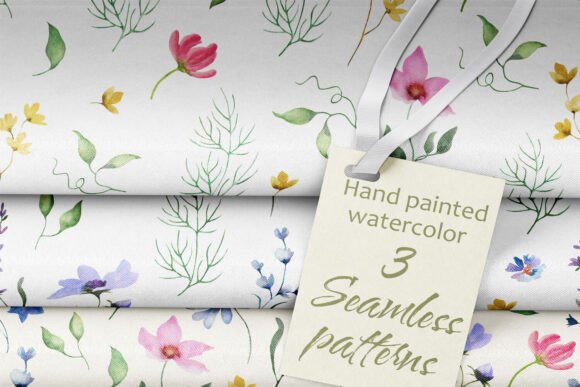
Botanical Watercolor Seamless Patterns
In the realm of digital design, few assets offer the same blend of organic warmth and structural versatility as botanical watercolor seamless patterns. For professionals ranging from textile designers to branding specialists, the ability to integrate hand-drawn botanical elements into a repeating grid is not merely an aesthetic choice—it is a functional necessity. The resource described here, delivered as a single zip file for large download, represents a curated collection of these specific assets. This evaluation examines the practical utility, technical quality, and creative potential of this asset pack, focusing on how it serves the workflow of modern creators.
The Nature of Seamless Botanical Assets
Before assessing the specific product, it is essential to understand the distinction between standard clip art and true seamless patterns. Standard botanical illustrations are isolated images—individual leaves, flowers, or stems—that require manual arrangement by the designer. While flexible, this approach is time-intensive and often results in visible seams or awkward spacing when scaled for backgrounds, textiles, or wrapping paper.
A botanical watercolor seamless pattern, by contrast, is engineered to tile infinitely without visible breaks. The edges of the image are mathematically aligned so that when repeated horizontally and vertically, the composition flows naturally. This creates a continuous field of texture that mimics the look of traditional wallpaper or fabric weave. The "watercolor" aspect adds a layer of complexity; unlike vector graphics which rely on sharp lines and solid fills, watercolor textures depend on subtle gradients, pigment bleeds, and irregular edges. Achieving seamlessness with such fluid forms requires significant artistic precision, making high-quality examples rare and valuable.
Technical Specifications and Usability
The delivery method—a single zip file containing a large download—suggests a comprehensive library rather than a small sample set. For designers working in Adobe Photoshop, Illustrator, Affinity Designer, or Procreate, having access to high-resolution, pre-seamed files eliminates the most tedious aspect of background creation: the tiling process itself.
Resolution and Scalability
Professional print work demands high DPI (dots per inch) resolutions, typically 300 DPI or higher, to ensure crisp reproduction at various scales. A robust asset pack should provide files that remain sharp whether applied to a business card or a billboard backdrop. When evaluating such downloads, users should verify that the included files are not compressed excessively, which can introduce artifacts that ruin the delicate nature of watercolor textures. The presence of both raster (PSD, PNG) and vector (AI, EPS) formats, if available, significantly expands the utility of the pack, allowing for non-destructive editing.
Color Variations
One of the strengths of a well-curated botanical pack is the inclusion of color variations. A single green-on-white pattern may not suit a luxury packaging project requiring gold accents or a soft pastel palette for nursery decor. Effective collections offer multiple colorways within the same structural pattern, allowing designers to maintain brand consistency while adapting to different mood boards. This flexibility reduces the need to source multiple disparate packs, streamlining the procurement phase of a project.
Creative Applications and Industry Fit
The applications for botanical watercolor seamless patterns extend across numerous industries. Their primary strength lies in their ability to add depth and narrative to flat surfaces. Below are key sectors where this asset type proves particularly effective:
- Fashion and Textile Design: Apparel manufacturers rely heavily on seamless repeats for fabric printing. A watercolor botanical pattern offers a softer, more artisanal feel compared to geometric prints, appealing to markets focused on sustainability, bohemian styles, or luxury loungewear.
- Packaging and Branding: Small business owners in the cosmetics, tea, or candle industries often use these patterns to convey natural ingredients and handcrafted quality. The organic imperfections of watercolor help humanize a brand, suggesting care and attention to detail.
- Digital Content and Blogging: For bloggers and educators, these patterns serve as excellent headers, sidebars, or background textures for presentations. They provide visual interest without overwhelming text content, provided the opacity is adjusted correctly.
- Interior Design Mockups: Freelancers creating virtual staging or wallpaper concepts can use these patterns to quickly visualize room aesthetics. The seamless nature allows for instant full-wall coverage in 3D rendering software.
Evaluating Quality and Consistency
Not all botanical assets are created equal. When reviewing a large download, several factors determine its long-term value:
- Edge Blending: The most critical test of any seamless pattern is the edge blend. Zoom in to 400% and inspect the corners. If there are hard cuts, mismatched colors, or obvious gaps, the asset is flawed. High-quality watercolor patterns will show smooth transitions where pigments bleed across the tile boundary.
- Layer Organization: In PSD files, are layers grouped logically? Can individual elements be removed or recolored independently? A disorganized file structure can hinder workflow, forcing designers to flatten images and lose editability.
- Artistic Cohesion: Does the collection feel unified? A mix of hyper-realistic photography and sketchy line art within the same pack can create a disjointed user experience. Consistency in style ensures that the assets can be mixed and matched without clashing.
Furthermore, the "hand-drawn" claim must be substantiated by the visual evidence. Digital brushes can mimic watercolor, but they often lack the random variation of real pigment. Look for subtle inconsistencies in stroke width and color saturation that indicate genuine artistic touch rather than algorithmic generation.
Limitations and Considerations
While powerful, these assets come with inherent limitations. First, botanical watercolor seamless patterns are generally best suited for projects that benefit from an organic, soft, or vintage aesthetic. They may clash with modern, minimalist, or tech-focused designs that require clean lines and stark contrasts. Designers must critically assess whether the mood of the pattern aligns with their project goals.
Second, the file size associated with high-resolution watercolor textures can be substantial. This impacts loading times for web use and storage requirements for local drives. It is advisable to downscale images for digital screens while retaining the original high-res versions for print. Additionally, licensing terms must be reviewed carefully. Some packs restrict commercial use or limit the number of end products, which can affect profitability for freelancers and agencies.
Final Assessment
The decision to utilize a botanical watercolor seamless pattern pack depends largely on the designer’s need for efficiency and aesthetic authenticity. For those who frequently create backgrounds, textiles, or branded materials, the time saved by using pre-seamed, high-quality assets is considerable. The ability to instantly generate complex, beautiful textures allows creators to focus on layout and messaging rather than pixel-pushing edges.
This particular resource, delivered as a comprehensive zip file, appears designed for serious practitioners who value volume and variety. Its worth is determined by the technical execution of the seams and the versatility of the included colorways. If the tiles are flawless and the styles are cohesive, this asset becomes a reliable component of a professional toolkit. However, users should always perform their own due diligence by testing the files in their specific software environment before committing to large-scale production. In an era where digital fatigue is common, the gentle, natural appeal of watercolor botanicals remains a potent tool for connecting with audiences on an emotional level.